Thank you! Your submission has been received
The best affordable home wind turbines
Testimonials
Find the best residential wind turbines for your home
Home and residential wind turbines are a great way to cut your electric bill and reduce your carbon footprint. Here at Corpus Christi, we put the best home wind turbines to the test to help you find the best option for your home
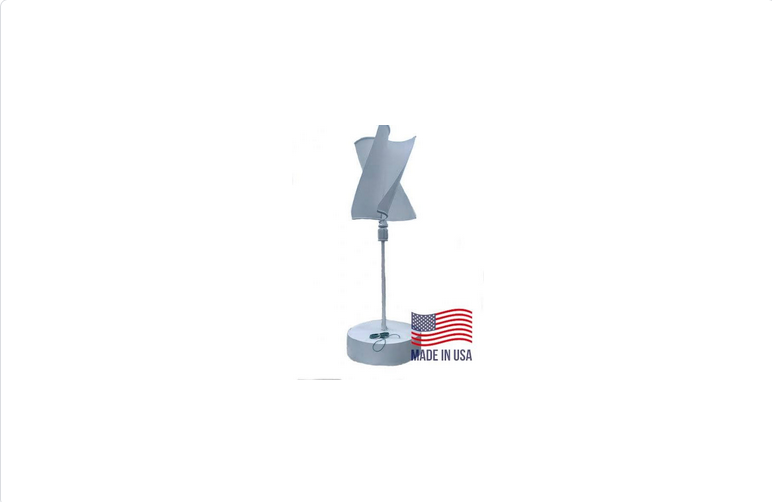
Best Residential Wind Turbines
With living expenses on the rise, more homeowners are looking to cut costs. Renewable energy is quickly growing within the homeowners market, as it’s eco-friendly and can save you some money when it comes to the electric bill.
That is why we’ve put the best home and residential wind turbines for homes to the test to help you in your search for the best option for your home.
Generating your own electricity is an easy way of cutting your electric bill in half (that’s a dream come true for many of us). While solar energy is generally the go-to eco-friendly option, wind power is a great solution for those living in areas with reliable wind speeds.
Contact us to learn more about the best affordable home wind turbines
Our home wind turbines are affordable and help you save money on your electricity bills. Contact us today to learn more
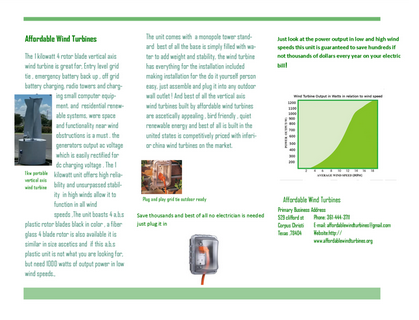
Home wind turbines: Overview, products, and costs
According to the American Wind Energy Association (AWEA), small wind turbines cost between $3,000 to $5,000 for every kilowatt of power capacity. However, the cost of installing a small wind turbine can vary depending on the size of the system, the height of the tower, and the equipment you buy. In most cases, the larger and taller the wind turbine is, the more expensive it will be.
Most homeowners using a wind turbine as their primary source of electricity install between 5 to 15 kW of wind power capacity, meaning they can expect to pay between $15,000 and $75,000 for their small wind turbine project. These numbers do not include any federal or state incentives.
Not every property is suitable for solar panels. However, that does not mean that you won't be able to generate clean energy on your property. One renewable energy technology that's becoming an increasingly popular alternative for homeowners looking to generate their own clean electricity is small wind turbines.
Small wind turbines, sometimes referred to as home wind turbines, are much smaller than the turbines you see on wind farms. While larger wind turbines can have a blade diameter that spans the length of a football field, small wind turbines typically have a diameter up to 10 meters wide. Because of the smaller blades, these wind turbines have a much smaller power output than large turbines. That makes small wind turbines perfect for projects with smaller electricity needs, such as residential, portable, or off-grid applications.
The best locations for small wind turbines are places that experience frequent, high wind speeds. Generally speaking, the taller the turbine, the windier the environment and the more electricity it's capable of generating. Most of the best spots for small wind turbines are on rural properties, as they tend to have a lot of space and few obstructions that would impact wind speeds. In certain instances, a small wind turbine has the potential to offset 100 percent of a home's electricity bill.
The Best Home Wind Turbines
Generate power at your home or off the grid with these wind turbines, ranging from affordable, portable options to models that can pair with solar panels.
Home wind turbines provide a way to independently generate power. They typically contain three blades and use the wind to create electricity. Some wind turbines can be used with solar panels to generate even more power.
Home wind turbines can be installed and static, or they can be portable. While all are suitable for land, not all are made for marine applications. The best wind turbine for your situation depends on its intended use as well as which features matter most for your applications.
Keep reading to learn about details to consider when choosing a wind turbine, and check out some of the best residential wind turbines available on the market.
There are many factors to consider when choosing the best residential wind turbine, including the number of blades, material, height, wind-speed rating, and energy output. The following are all the factors to consider before making a decision.
Energy Output
Different wind turbines have different energy outputs, which depend on the blade material and size, and the level of wind speeds the turbine can accommodate before having to shut off. Therefore, a larger turbine with larger blades will be able to capture more energy than a smaller one. The energy output is typically rated in watts.
Most turbines don’t operate near their maximum capacity for energy output, with typical outputs of 30 to 40 percent their capacity. However, even at this percentage, wind turbines can produce many megawatt hours of energy. A megawatt hour of energy is equivalent to 1,000 kilowatts of energy produced per hour.
Additional Features
Certain wind turbines come with kits that include everything the user needs to get started. Some turbines come with mounting equipment, such as poles, while others will not.
Turbines can also come with a controller that provides remote access to the device. Other turbines are waterproof-rated to ensure they can perform marine applications with anti-corrosion features. What additional features to choose depends on the user’s goals for their turbine.
Our Top Picks
After reviewing numerous options for the best home wind turbine, we evaluated them based on various typical home needs. Below are some of the best, organized by category. One of these may be the right pick for you to start producing extra energy by harnessing the power of the wind.
As a tech-nut and green energy enthusiast, I’ve covered a wide range of sustainable energy products for the likes of Popular Science, Scientific American, The Daily Beast, The Manual, and more. These extensively researched selections represent the best wind turbines available right now, based on a combination of first-hand trials, input from industry professionals, and impressions from real buyers.
One critical caveat: In light of ongoing supply chain issues, we’ve elected to focus on turbines that are regularly available from major retailers like Amazon and Home Depot. There are several well-respected options that we’ve elected to leave out at this time, as they have not been in stock and may not be available again for the foreseeable future. We will update this story as more choices become widely available.
It’s made to last, and rated for 15 years of maintenance-free operation. It features electromagnetic over-speed protection and overcharge protection to increase its lifespan. It’s also just solidly built: It can survive a bad tropical storm or even a low-level hurricane.
Wind turbines and solar panels are a natural match. Turbines often work best at night when wind speeds tend to be faster, while solar panels store up plenty of energy during the day. It sells a green energy combo that pairs the two to generate up to 1800W of power per hybrid kit. That isn’t enough to power a full home, but the combination provides enough electricity throughout the day to keep your batteries topped or power a smattering of small appliances
With a few of them, or with one and a set of solar panels, you should be able to generate enough power to run an off-grid cabin or a farm that requires intermittent electricity. It’s also solidly built and will provide many years of reliable performance.
It’s certainly not cheap and, at just over 200 pounds, it’s pretty heavy. Given the weight, it also won’t be easy to install. That said, if you have a good place to put it, you’ll have plenty of reliable power.
What to consider when buying a wind turbine
Not all residential wind turbines are created equal. Many don’t generate enough power to make a meaningful difference for many homes. Some are prohibitively expensive or too large to be for residential use. Whatever the case, there are a few things to consider when choosing a wind turbine for your home.
What you can get out of a home wind turbine
According to the Energy Information Administration, The average home in the United States uses approximately 10,000 kilowatt-hours (kWh) per year. To generate that much power, you need alternative energy sources that can harness nearly 30 kWh per day.
If you adjust your expectations, though, you can get a lot out of even a single home wind turbine. A turbine that generates a maximum output of 400 watts (W) will give you up to 1.3 kWH per day. That’s enough to shave 4 percent off an average 30 kWh electric bill, or power a fridge and a few small devices if the power goes out.
We recommend shooting for the largest possible output that fits your budget and home. Some of our top picks generate 1000W or higher, which can knock the average energy bill down by 10 percent, or provide a moderate amount of backup power.
Who should buy a wind turbine?
Wind turbines can produce a fair amount of green electricity for you, but they need to be placed well. That means you need to take a good, hard look at your property and figure out whether wind power makes sense.
With freestanding turbines, you typically want a large open space like a field, large yard, or hilltop position. For a rooftop turbine, you need to find a spot on your roof that won’t be obstructed by trees where you can secure the turbine safely. Make sure your roof can handle the weight, and it probably shouldn’t be at a sharp incline.
If you don’t want a wide open space or safe spot on your roof that isn’t obstructed, you won’t be able to get the maximum output from the turbines. In that case, you may want to look at other ways of generating sustainable energy.
Type of wind turbine
Wind turbines vary greatly in regard to size, form, power output, and installation difficulty. The one that is right for you depends on your home, space, power needs, and building experience.
Some wind turbines are smaller and designed to be installed directly onto your roof. They take advantage of the faster winds that tend to whip over your house. These are usually less expensive but they typically generate smaller power outputs. Also, you need to install them on your roof, which may be dangerous.
Standalone turbines tend to be significantly more powerful, but are usually more expensive and require a lot of open space like a field or an unblocked hilltop. They’re also often difficult to install. A rooftop turbine is relatively straightforward to bolt in place while standalone turbines require digging to seat the pole, structural support, running wires to the house, and so on.
Lastly, boat-owners can install smaller marine turbines to help power devices and equipment. While they don’t produce all that much power, they’re built to withstand maritime conditions and can be a great way to ensure that your batteries stay topped off.
.png)
U.S. Wind Industry Federal Incentives, Funding, and Partnership Opportunities
U.S. Wind Industry Federal Incentives, Funding, and Partnership Opportunities Fact Sheet
Wind power is a burgeoning power source in the U.S. electricity portfolio, supplying over 10% of U.S. electricity generation.
The U.S. Department of Energy’s (DOE’s) Wind Energy Technologies Office (WETO) focuses on enabling industry growth and U.S. competitiveness by supporting early-stage research on technologies that enhance energy affordability, reliability, and resilience and strengthen U.S. energy security, economic growth, and environmental quality. Outlined below are the primary federal incentives for developing and investing in wind power, resources for funding wind power, and opportunities to partner with DOE and other federal agencies on efforts to move the U.S. wind industry forward.
Wind Energy Funding Opportunities
Funding for wind projects may be available through other offices in the U.S. Department of Energy or other federal agencies. Financial opportunities not related to the Wind Energy Technologies Office are listed below.
For more information about federal incentives for developing and investing in wind power, resources for funding wind power, and opportunities to partner with DOE and other federal agencies, see the U.S. Wind Industry Federal Incentives, Funding, and Partnership Opportunities fact sheet.
For the many federal resources available to support offshore wind deployment from DOE, the Department of the Interior, the Department of Commerce, and the Department of Transportation, see the Advancing the Growth of the U.S. Offshore Wind Industry: Federal Funding and Incentives
fact sheet. These resources include tax programs, grants and funding opportunities, and federal financing programs.
Tax Incentives
The federal government currently offers several tax incentives for wind projects. The Department of the Treasury's Internal Revenue Service (IRS) administers these incentives.
Businesses that begin construction on wind energy systems by December 31, 2024 are eligible for either the federal Business Energy Investment Tax Credit
(ITC), tied to the total value of the facility, or the federal Renewable Electricity Production Tax Credit
(PTC), tied to the energy produced over a ten-year period. Starting in 2025, these tax credits are replaced with emissions-based, technology-neutral tax credits available to all types of power facilities with zero or net-negative carbon emissions. It will begin phasing out either in 2032 or when total greenhouse gas emissions in the power sector decline to at least 75% below 2022 levels—whichever comes last.
Residential taxpayers who install small wind energy systems (turbines 100 kilowatts or smaller) by December 31, 2034 are eligible for the federal residential renewable energy ITC.
The specific value of wind tax credits is dependent on whether a system is considered large or small, when the system is built, and other factors. For more information, see the U.S. Wind Industry Federal Incentives, Funding, and Partnership Opportunities fact sheet.
Other Financial Opportunities from DOE
The EERE Funding Opportunities Web page provides links to useful resources about financing and incentives for energy efficiency and renewable energy projects for the home, business, industry, utilities, and government.
DOE awards funding to small businesses for renewable energy research and development (R&D) projects through its Small Business Innovation Research (SBIR) and Small Business Technology Transfer (STTR) programs. Visit DOE's Small Business Innovation Research and Small Business Technology Transfer website to apply for grants.
DOE's Advanced Research Projects Agency-Energy (ARPA-E) sponsors R&D grants for earlier-stage, high-potential, high-impact energy technologies. Visit ARPA-E's website for more information on grant opportunities or to apply.
Under the Title XVII Innovative Energy Loan Guarantee Program, DOE's Loan Programs Office (LPO) finances large-scale renewable energy and efficient energy projects, including $1.69 billion in loan guarantees to four commercial-scale wind projects. With $4.5 billion in lending authority under its Renewable Energy and Efficient Energy Projects solicitation, LPO is ready to support innovative energy projects that are catalytic, replicable, and market ready. For more information, visit the LPO website.
In addition, DOE's Tribal Energy Program provides financial and technical assistance, education and training to tribes for the evaluation and development of renewable energy resources on tribal lands.
If you are interested in applying for funding, but your project does not fit within the scope of the posted solicitations, funding opportunities, or past opportunities, please submit your proposal to DOE's Unsolicited Proposal Office
.
For additional information on other funding opportunities such as bonds and Rural Energy for America loans and grants, as well as opportunities to partner with national laboratories, see our fact sheet.
Small Wind Turbines (Residential) Tax Credit
The following Residential Clean Energy Tax Credit amounts apply for the prescribed periods:
30 % for property placed in service after December 31, 2016, and before January 1, 2020
26% for property placed in service after December 31, 2019, and before January 1, 2022
30% for property placed in service after December 31, 2021, and before January 1, 2033
26% for property placed in service after December 31, 2032, and before January 1, 2034
22% for property placed in service after December 31, 2033, and before January 1, 2035
Claim the credits using the IRS Form 5695.
Instructions for Form 5695 (Print Version - PDF)
What products are eligible?
A wind turbine collets kinetic energy from the wind and converts it to electricity that is compatible with a home's electrical system.
A qualified small wind energy property uses a wind turbine to generate electricity for use in connection with a home in the United States and used as a residence by the taxpayer.
Tax credits includes installation costs.
At ENERGY STAR
Your go-to resource for the latest advice from ENERGY STAR experts on saving energy at home and work.
ENERGY STAR Home Upgrade
6 high impact improvements to save you thousands.
Who can use this credit?
Existing homes and new construction qualify. Both principal residences and second homes qualify. Rentals do not qualify. This system must be installed in connection with a dwelling unit located in the United States and used as a residence by the taxpayer. The home served by this system does not have to be the taxpayer's principal residence. A principal residence is the home where you live most of the time. The home must be in the United States. It can include a house, houseboat, mobile home, cooperative apartment, condominium, and a manufactured home.
Newly Updated Fact Sheet on Federal Incentives, Funding, and Partnership Opportunities for U.S. Wind Is Available
Newly Updated Fact Sheet on Federal Incentives, Funding, and Partnership Opportunities for U.S. Wind Is Available
WETO has updated its U.S. Wind Industry Federal Incentives, Funding, and Partnership Opportunities fact sheet that outlines federal incentives for developing and investing in wind power, now including new guidance
from the U.S. Treasury Department and Internal Revenue Service about the bonus under the Inflation Reduction Act for clean energy projects and facilities located in communities that have driven and historically been at the forefront of energy production.
Wind Energy Financial Incentives
Financing incentives can impact overall project economics and are an integral part of the successful implementation of distributed and utility-scale wind energy. As with all energy projects, federal, state, local, and utility financial incentives are also available for wind projects.
The Database of State Incentives for Renewables and Efficiency (DSIRE) is a comprehensive source of information on incentives that promote renewable energy and energy efficiency. Interested parties can search by Zip code to learn about programs in their area. The following provides an overview of the main federal incentives for wind energy projects.
The federal government uses subsidies and incentives to stimulate deployment for all energy technologies. These subsidies can include:
Federal programs that provide direct cash outlays to producers or consumers of energy
Tax expenditures that reduce the tax liability of firms or individuals who take specified actions that affect energy production, distribution, transmission, consumption, or conservation
Energy research and development (R&D) activities aimed at increasing U.S. energy supplies or improving production and end-use technologies
Support for federal and rural utilities
Loans and loan guarantees that provide financial support for energy technologies by guaranteeing the repayment of loans obtained in the private debt market or by lending money directly to energy market participants.
The following is a breakdown of current and past federal incentives for wind energy, including an update on the Production Tax Credit (PTC).
Production Tax Credits and Investment Tax Credits
Federal, state, and local regulations govern many aspects of wind energy development. The nature of the project and its location will largely drive the levels of regulation required. Check the database of federal and state renewable energy policies and incentives.
Originally enacted in the Energy Policy Act of 1992, the PTC is a production-based tax credit available to various renewable energy sources, implemented to level the playing field based on the incentives provided to other energy sources. The Investment Tax Credit (ITC) provides a credit for investment costs at the start of a project.
In August 2022, Congress passed the Inflation Reduction Act (IRA), which extends the Production Tax Credit (PTC) and the Investment Tax Credit (ITC) for wind projects through 2024. Additionally, the IRA adds increased credit amounts and bonus tax incentives to the PTC and ITC for projects that meet specified requirements. In 2025, the standing PTC and ITC will be converted to technology-neutral versions, which will begin phasing out in 2032, or when total power sector greenhouse gas emissions decline to at least 75% below 2022 levels, whichever comes last. Learn more about available tax credits.
To learn about primary federal incentives for developing and investing in wind power, resources for funding wind power, and opportunities to partner with the U.S. Department of Energy and other federal agencies on efforts to move the U.S. wind industry forward, see Advancing the Growth of the U.S. Wind Industry: Federal Incentives, Funding, and Partnership Opportunities.
Recovery Act
The American Recovery and Reinvestment Act of 2009, known as ARRA or the Recovery Act, allowed wind projects to take the ITC in lieu of the PTC. ARRA also created the Section 1603 Treasury grant, a temporary program that enabled specified energy property built by the end of 2012—including wind projects—to receive a cash grant of 30% of a project’s capital costs in lieu of either the PTC or ITC.
Given the challenges in securing tax equity during the financial crisis, Section 1603 has been credited with supporting the continued growth of the renewable energy sector during what was otherwise a challenging investment environment. The program also reduced barriers for newer and less-experienced wind developers, who might otherwise have faced sizable challenges in accessing the limited supply of tax equity.
ARRA also created the Section 1705 Loan Program for commercial projects, which closed on four loan guarantees to wind projects totaling more than 1,000 megawatts.
Accelerated Depreciation
Accelerated depreciation through the federal Modified Accelerated Cost-Recovery System (MACRS) allows wind project owners to depreciate most project capital costs on a 5-year schedule. The Economic Stimulus Act of 2008 and subsequent legislation provided a further 50% first-year bonus depreciation provision for projects built between 2008 and 2010. The American Taxpayer Relief Act of 2012 extended a 50%, first-year bonus depreciation to projects placed in service through December 31, 2013.
Rural Energy for America Program
The U.S. Department of Agriculture provides farmers and ranchers with loan guarantees and grants for renewable energy development assistance through its Rural Energy for America Program (REAP). Entities such as state, local, and tribal governments; educational institutions; and rural electric cooperatives are also eligible for REAP incentives.
More Information
Learn more about economic incentives.
Publications
https://www.reddit.com/user/Pluggedwind/comments/12vohw0/plugged_wind_turbines/
https://www.reddit.com/user/Pluggedwind/submitted/
https://www.facebook.com/pluggedwind/posts/133995646316378/
https://www.pinterest.com/pluggedwind/
https://www.tiktok.com/@pluggedwind
https://8importantthingstoknowabouthomewindturbines.weebly.com/
https://affordablewindturbineshome.weebly.com/plugged-wind.html
https://affordablewindturbines1.weebly.com/
https://homewindturbines-windgenerators-thehomedepot.weebly.com/
https://images.app.goo.gl/NTaSVVNQfMRDE6Qj7
https://images.app.goo.gl/fYXhr1WM76gtdVqJ7
https://images.app.goo.gl/usLApjAwz4UYW97V7
https://www.youtube.com/@PluggedWind/xregexp
https://www.youtube.com/watch?v=PiytiUuWOSU